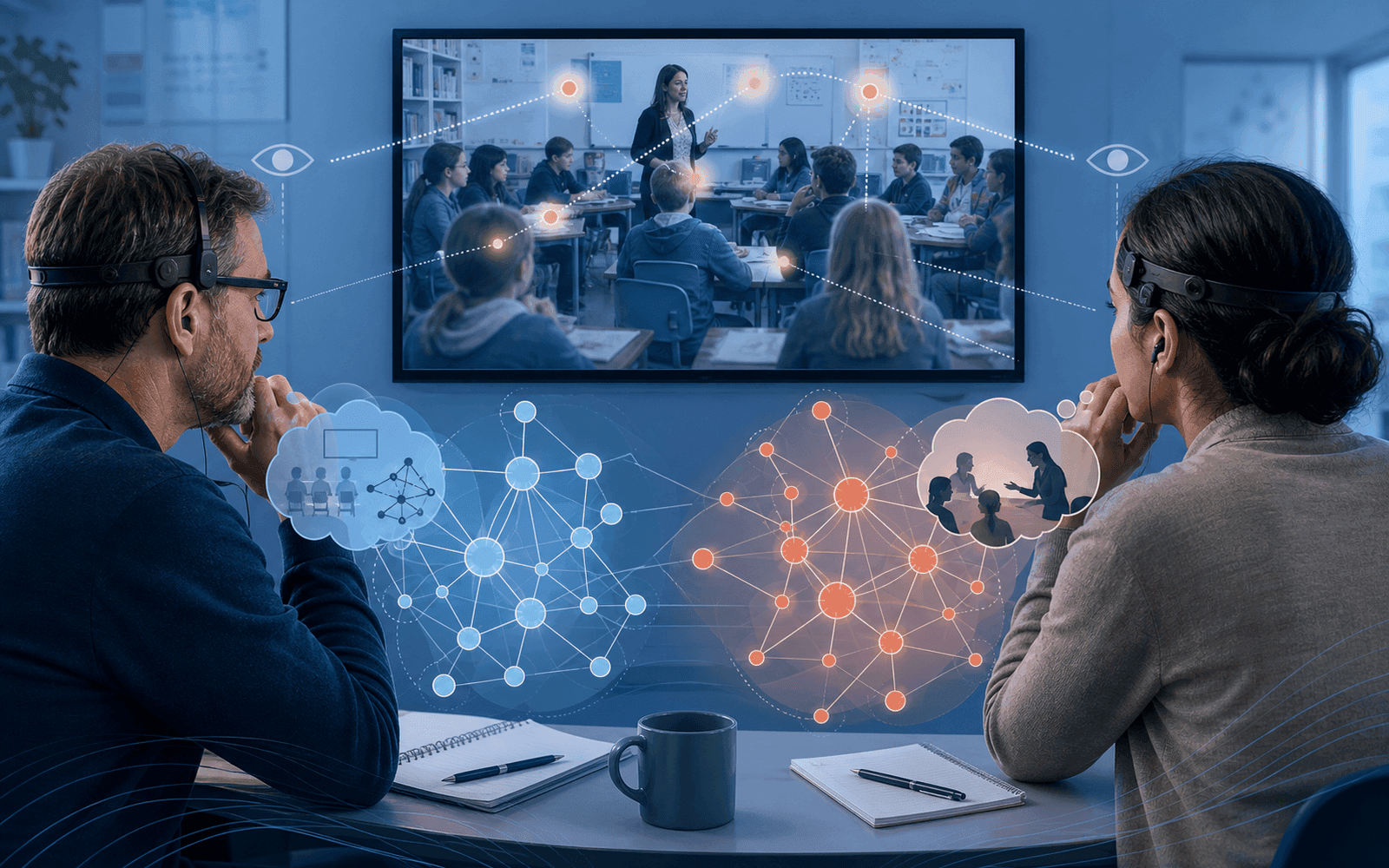
Coordinated gaze became a network of collaboration and repair
Frontiers in Psychology
যাচাইকৃত প্রবন্ধের সারাংশ বর্তমানে ইংরেজিতে উপলভ্য।
যাচাইকৃত সারাংশ
Andrist and colleagues demonstrate that Epistemic Network Analysis can model coordinated behavior, not only coded speech. Their 2015 Frontiers in Psychology article examines how two people's gaze patterns unfold during a shared task and how those patterns differ when communication breaks down and must be repaired.
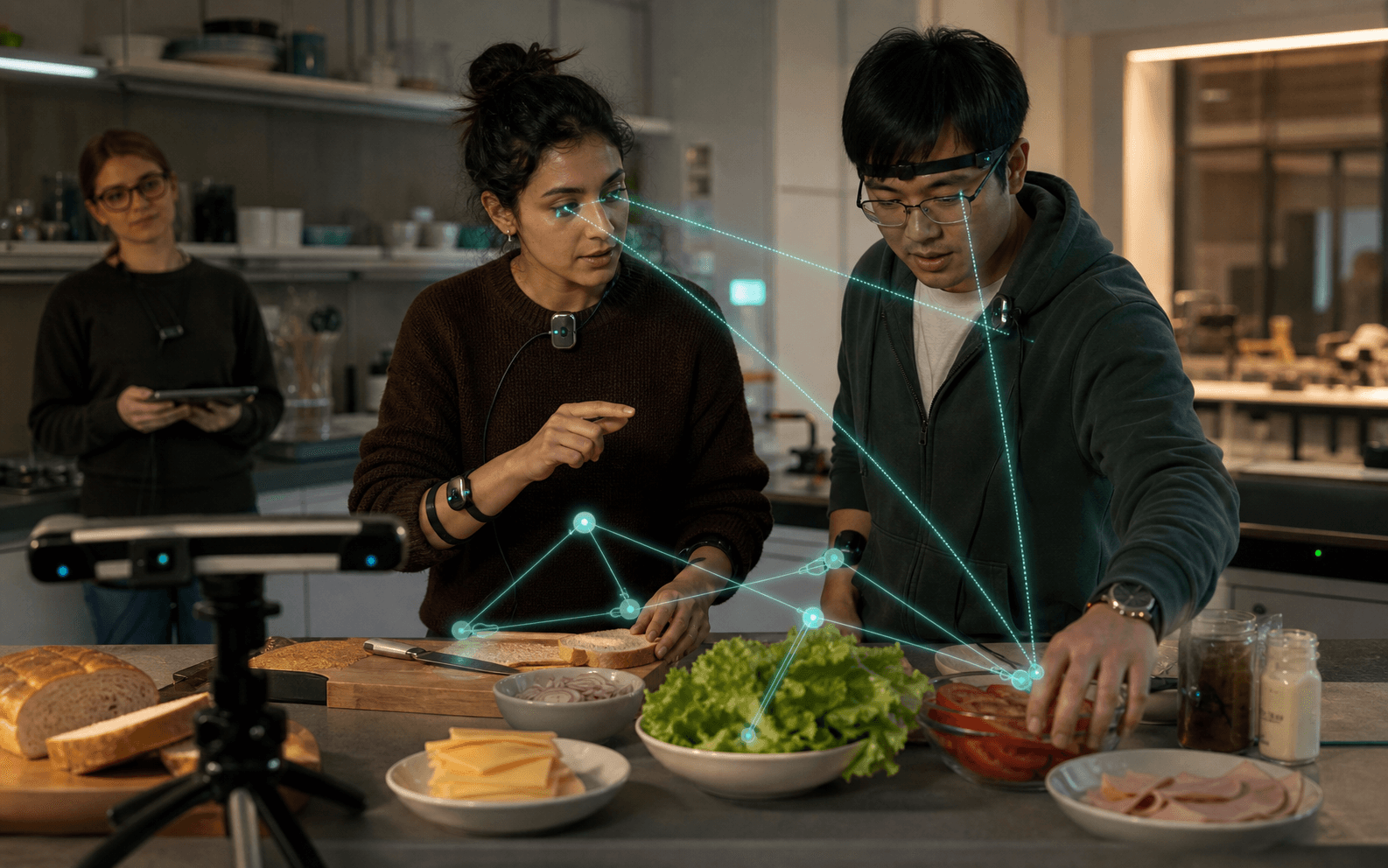
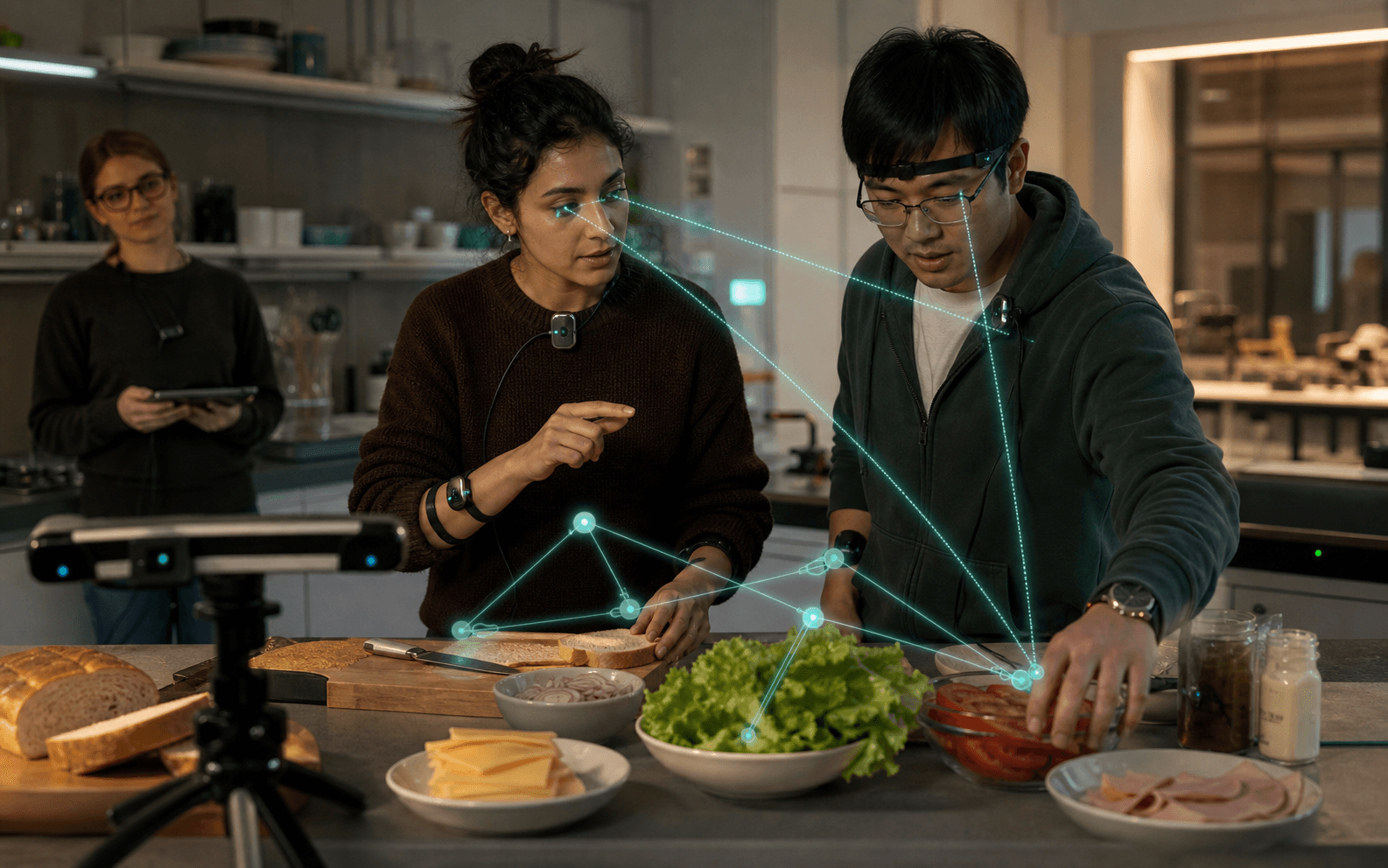
The researchers recruited 13 pairs of previously unacquainted participants. Each dyad completed a collaborative sandwich-making task twice, reversing the instructor and worker roles, for 26 interactions. The instructor verbally referred to visible ingredients, while the worker selected and assembled them. Synchronized mobile eye trackers recorded where both participants looked, and speech was transcribed so the interaction could be divided into reference-action sequences and phases.
ENA jointly modeled the gaze targets of both participants. Nodes represented the targets at which each partner could look, and connections represented the likelihood that gaze targets co-occurred within a 50 millisecond segment. The authors ran three analyses. One compared the structure of gaze across five phases of a reference-action sequence. A second examined how the time lag between partners' gaze changed across those phases. A third compared sequences containing breakdowns or verbal repairs with sequences that proceeded without repair.
The networks separated the interaction phases and revealed an orderly cycle in coordinated gaze. Leadership shifted between instructor and worker as a reference was introduced, interpreted, acted on, and completed. Alignment rose and fell rather than remaining constant. Sequences that eventually required repair also showed different gaze relationships, including differences visible before the verbal repair occurred. That observation suggests the possibility of detecting emerging misunderstanding from a relational pattern rather than from one person's gaze in isolation.
The findings are specific to a controlled, object-focused collaboration with a small sample of dyads. ENA did not prove that a particular gaze connection caused success or failure, and the paper's suggestion of early repair detection is a design implication rather than a deployed classifier. Gaze targets, time slices, task phases, and interaction roles were carefully defined for this study; other settings would require new theory and validation. The article's lasting contribution is methodological: by representing two streams of behavior in one network, ENA made their coordination, timing, and changing relational structure available for comparison while retaining a path back to the interaction sequences that produced the model.